

Welcome to Uwa Connect,
direct access to your Pediatric Health Coach.
Uwa Connect is not a substitute for professional medical advice and is not intended for diagnosis or treatment of health problems or disease. Uwa is intended to provide education and support in tandem with guidance from your qualified healthcare provider.

If you are in crisis and need immediate assistance:
Call/Text - Suicide and Crisis Lifeline - 988
Call/Text - National Maternal Mental Health Hotline
1-833-943-5746 (1-833-9-HELP4MOMS) in English and Spanish
Call - Georgia Crisis and Access Line (GCAL)
(800)-715-4225 or
Text - "GA" to 741-741 to text a crisis counselor 24/7
Call 911 or go to your nearest hospital ER
Featured Article
-
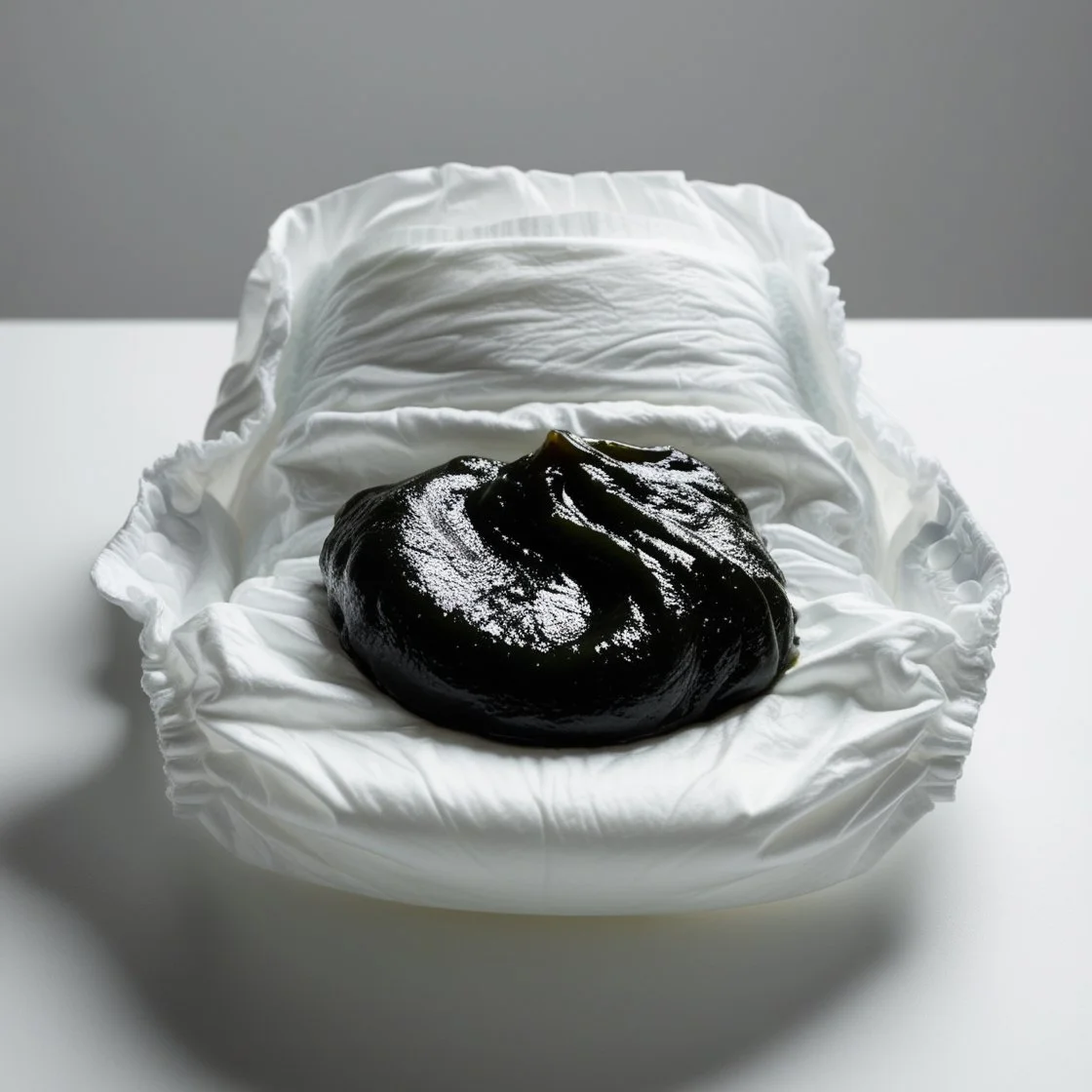
While in the uterus, your baby was being entirely nourished by their placenta through their umbilical cord. Although babies can be seen swallowing even while in the uterus (very cute to watch on ultrasound and actually has an important purpose), this is to help their intestinal system develop and not for nutrition purposes. Because of this, when your baby is born, their first feeding out of the uterus is the first feeding for nutrition they have ever had! Like all feedings thereafter, this first feeding triggers the muscles of their intestines to start to move and squeeze as the first digestive process begins. Usually this will trigger the first bowel movement. We call this Meconium. Meconium is the first tarry blackish/dark green substance your baby will pass as a bowel movement (not technically poop!). Meconium is made up of amniotic fluid, mucus, lanugo (the fine hair that covers your baby's body), bile, and cells that have been shed from the skin and their intestines.
Fun Fact: Meconium is actually a sterile substance, meaning there is no bacteria in it. This is the main factor that makes meconium different from poop.
As your baby starts to drink more milk or formula, their intestines will squeeze all the meconium out and they will transition to a range of normal newborn poops.
If your baby has not passed a meconium bowel movement yet or continues to pass meconium after 1 week of life please see your baby’s doctor for further guidance.
Where’s the poop?!
One of the things your baby’s care team will be watching out for is to see meconium “pooped” out before your baby is to be discharged home. Generally your baby’s intestines should be able to pass a meconium stool within 48 hours of birth. If your baby has a delay in passing meconium, this can signal a range of issues with your baby’s intestines, abdominal wall, or how their meconium was made. Your team may need to do a rectal exam and recommend various imaging tests to evaluate why your baby has not passed meconium yet.
Meconium Aspiration syndrome
Sometimes the stress of late pregnancy and delivery can trigger the meconium bowel movement while your baby is still in the uterus or on their way out. When this happens, your newborn team at delivery will work to suction your baby’s airway to remove any meconium before they take their first breath. Although meconium has no bacteria in it, it is a chemical substance and when breathed into the lungs along with amniotic fluid (called aspiration), it can cause a potentially life threatening chemical inflammation to the newborn lungs. This is called meconium aspiration syndrome.
The inflammation caused by this condition can make it difficult for newborn lungs to adequately get oxygen and increases risk for infections and other organ injury. Depending on the severity of the aspiration, this is treated in the newborn intensive care unit (NICU) with various types of oxygen and ventilation support, antibiotics to prevent infection and possibly surfactant (surfactant is a chemical lining made by lungs that helps keep the balloon-like air sacs open in the lungs).
Newborns who suffer from meconium aspiration syndrome usually recover within a week of birth. Severe cases may take longer to recover from and rarely may predispose your baby to longer term chronic lung problems.
If your newborn has a history of meconium aspiration syndrome and is having a new concern for breathing issues please contact your baby's doctor as soon as possible for additional guidance.
Written by: Dr. Kwaji