Newborn Poop Colors
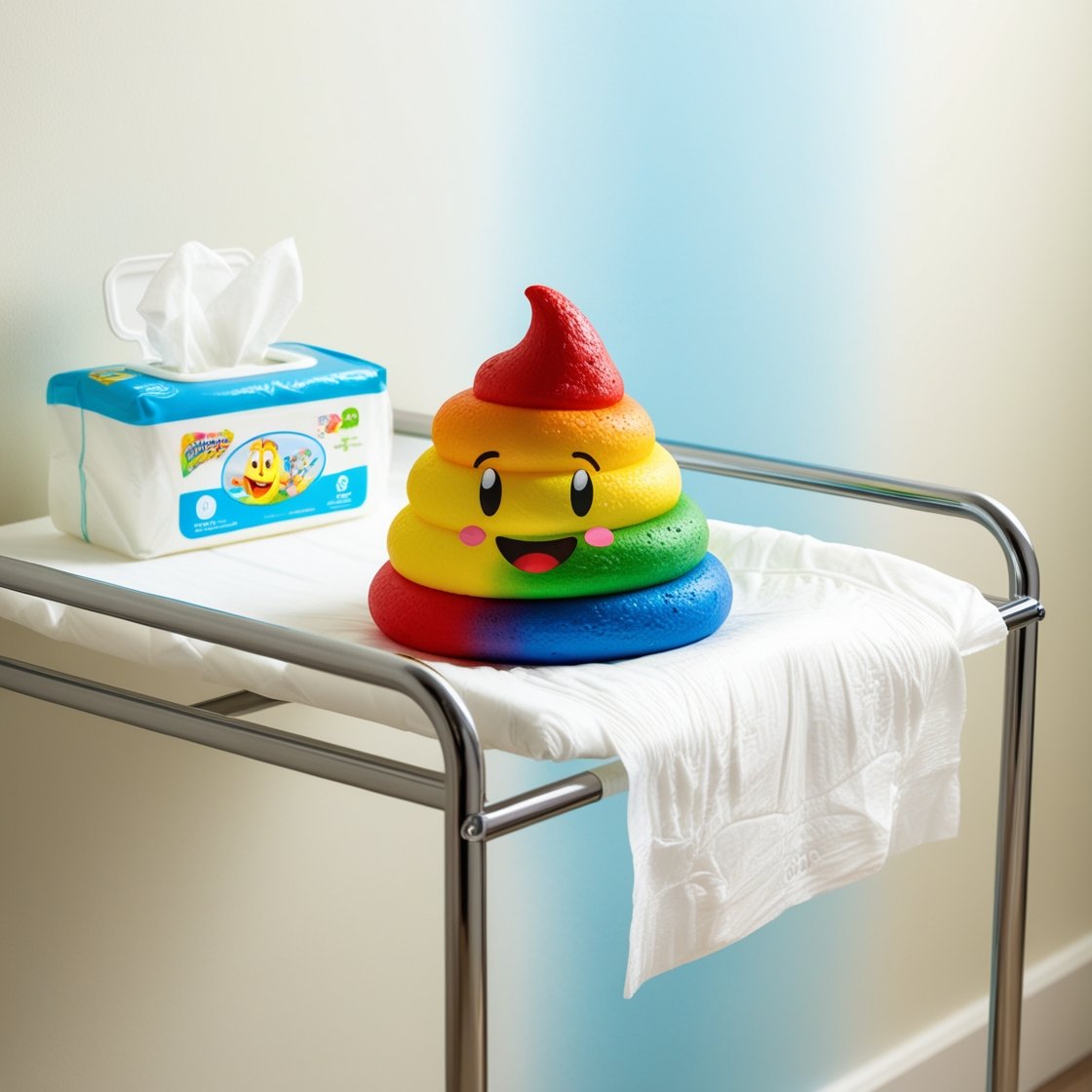
It usually takes 2-3 days for your baby to pass their meconium bowel movements at which point their poops will start to change color to a greenish-brown and eventually a mustardy orange/yellow by day 5-7 of life.
There are however a rainbow of acceptable colors for newborn poops with only a few colors raising concern
The color of poop is a combination of what is eaten, how long the digestive process takes, and byproducts of red blood cells being broken down.
Typical newborn poop colors include:
Yellow
Brown
Green
For medical purposes there are three colors doctors worry about in poop:
Red poop: Red colored poop may be caused by foods or drinks your older baby has ingested and may even result from cracked bleeding nipples in breastfed infants but in general assume red is abnormal. Red poop is associated with concern for fast sources of bleeding or bleeding coming from the lower intestines like the colon. This is called hematochezia. Red blood found in normal poop could be a sign of a milk protein allergy, while red blood in diarrhea could mean your baby has a bacterial infection or enough intestinal inflammation to make the lining of the intestines bleed. Red poop may also result from tears around your baby’s anus or raw skin from a diaper rash.
Black poop: After the initial first week of meconium poops, black poop is generally considered abnormal. Black poop is associated with concerns for slow bleeding. When blood has time to be digested and exposed to oxygen it changes the chemical structure of the iron in blood, making red blood appear dark brown or black. This is called melena and usually is a sign of bleeding from the upper intestines like your stomach.
White/pale poop: The normal range of colors in your baby’s poop is due to byproducts of what they eat but also because of bile released from their liver through the gallbladder into their intestines. White/grey/pale poop would indicate a decrease in bile released into the poop. This can be a sign of problems with their gallbladder or liver which can be linked to several conditions. Another cause for pale poops can be increased fat in the poop. This can be due to increased intake of fat in your baby’s diet (like a particularly fat forward breast milk feeding) or issues with how your baby’s body absorbs fat in the intestines. This is called steatorrhea and can cause pale, large volume, oily, strong smelling poops.
If you have any concerns that your baby’s stool colors fall in the abnormal range please contact your baby’s doctor as soon as possible for guidance and further evaluation.
Written by: Dr. Farida Kwaji
Uwa Postnatal Care